How Forced Selling Crashes Markets — and Why 2020 Was a Trap
In March 2020 the VIX closed at an all-time high of 82.69. Institutions sold into the crash — not from fear, but because a formula ordered them to sell.
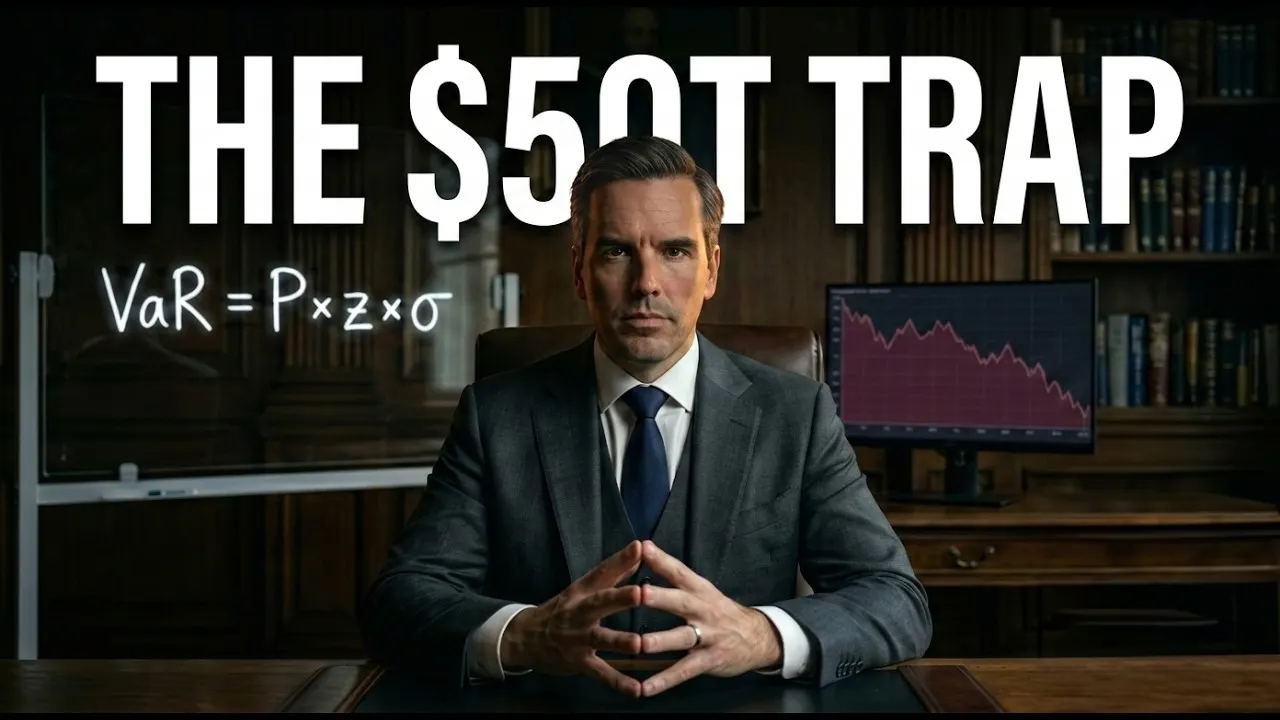
How $50 Trillion in Forced Selling Crashed the Market
Prefer to watch? This article is the written companion to the video above.
March 2020. The world shut down. Markets crashed faster than in 1929. On social media, pure panic: sell everything, the system is dead.
Now picture a trading floor at a major European bank. Phones ringing. Chaos. And one trader, twenty years of experience, managing 300 million euros, calmly sells millions, turns away from his six screens, and orders lunch.
He didn’t sell because he wanted to. He sold because a spreadsheet told him to.
Most people think markets crashed in 2020 because of a virus. That is only half the story. Markets crashed that hard because of a math formula, one that governs an enormous pool of the world’s capital. Today I’ll show you the formula, why retail investors appeared to beat the professionals in 2020, and why repeating that same game in the next crash could wipe you out.
Educational content only — not investment advice.
Price isn’t always about value
Here is the uncomfortable truth from inside the machine: a falling price does not always mean the companies got worse. Sometimes it just means large institutions were forced to sell.
To understand why, you need one concept: the risk budget.
You have a budget for money. A Ferrari costs 200,000; you have 50,000; you can’t buy it. Simple. Institutions have a budget for risk, and the price of risk is volatility.
- Market calm → risk is cheap → they can hold lots of shares within budget.
- Market panic → risk gets expensive → the same shares suddenly consume far more of the budget.
That sounds like a metaphor. It is closer to a receipt.
The risk budget
Same limit, same shares, less and less allowed
A regulated desk has a fixed ceiling on estimated loss. That estimate scales with volatility, so when volatility rises the same portfolio suddenly consumes more of the budget. Here is how much of the original position still fits underneath the ceiling.
By the bottom row, a desk that held €100m of shares on the calm Tuesday can justify roughly €18m of the same shares. Nothing happened to the companies. The other €82m has to go, and it has to go now.
Now multiply that by every pension fund, insurer and bank running to a formal limit, all of them recalculating on the same morning against the same spike. That is not a wave of fear. It is several thousand spreadsheets reaching the same conclusion simultaneously, and it is why a crash can look completely detached from the news.
Look at what that table is actually saying, because it is the whole article. The manager took no view. Nobody downgraded anything. Volatility rose, the estimate of possible loss rose with it, and the position that fitted under the ceiling shrank by the same factor. By the bottom row the desk can justify less than a fifth of what it held three weeks earlier.
That pension fund, that bank portfolio, suddenly could not “afford” its own stocks. Not because Apple became bad. Because their risk budget was blown.
It is worth being concrete about who this actually binds, because “institutions” is doing a lot of vague work in most explanations. A bank’s trading book sits under capital rules that scale with measured risk, a European insurer runs under Solvency II, which charges capital against market risk and recalculates as markets move, a UCITS fund has risk limits written into its own prospectus, and a pension scheme has a funding position its trustees are obliged to monitor and report on whatever the weather. None of these people are nervous amateurs. Not one of them is free to say “I’ll ride this out” if the number breaches. The person with the least freedom in a crash is the professional. The person with the most is you.
And this is why March 2020 was the extreme case
The VIX, the fear index, closed at 82.69 on 16 March 2020. That is the highest closing level in the index’s history, above the 80.86 peak close of the 2008 crisis.
The price of fear
Where the VIX has actually been
The last two rows are worth separating carefully, because they get merged constantly. March 2020 set the record for a closing level. The highest the index has ever traded intraday is still October 2008, and 2020 never touched it.
For a private investor the distinction changes nothing about what to do. It matters because it is the difference between a number you can check and a number you repeated, and this article asks you to make a real decision based on this gauge.
One precision, because I would rather be exact than dramatic. 82.69 is the record close. The highest the VIX has ever traded intraday is 89.53, on 24 October 2008, and March 2020 never reached it. Plenty of coverage merges the two. The distinction does not change what you should do, and it does change whether you can trust the rest of the sentence.
The formula: Value at Risk
The formula behind all of this is Value at Risk, or VaR. It estimates how much a portfolio could lose, and many institutions, along with their regulators, cap it at a fixed level.
The trap is built into the maths: when volatility explodes, VaR rises on its own, even if the manager does nothing. The formula then reports that the portfolio is too risky, and the rules require selling to bring it back under the cap.
It’s not a suggestion. For a regulated desk, it’s an obligation. The trader who refuses risks his career. So he sells, into the crash, at the worst price, because the math forced him.
This is the exact mechanism that destroyed Long-Term Capital Management: brilliant people, imprisoned by their own risk model.
When many institutions hit their limits at once, you get forced deleveraging — mechanical, robotic selling, like a robot vacuum hitting a wall, except with billions of euros. The pool of capital run to formal risk limits, meaning pension funds, insurers and banks, runs into the tens of trillions of dollars.
There is a bitter elegance to it that is worth sitting with for a second. The model exists to stop institutions taking too much risk. It does that job well in calm markets. In a crash it turns every careful institution into a seller at the same moment, which makes the crash worse, which raises volatility again, which tightens every limit further. The safety mechanism is also the accelerant, and everyone involved knows it.
Why retail “won” in 2020
Now the other side. The neo-broker generation had no risk manager. No VaR model. No regulator. Just a smartphone, a buy button, and, for many, some stimulus money.
So while the S&P 500 crashed roughly 34%, this new wave didn’t freeze. They bought. And bought. And bought more.
The professionals? The BofA fund manager survey in April 2020 showed institutional cash at 5.9%, the highest since the 9/11 attacks. The “smart money” sold, hesitated, went to cash.
If you bought in March 2020, by August you felt like a genius while the pros sat on the sidelines. Let’s be honest: in 2020, the “dumb money” acted like heroes.
But you didn’t win because of skill. You won because you broke rules at the one moment breaking them paid.
Why that victory was a trap
The pros didn’t lose because they were scared. They lost because they were in a mathematical prison. And you didn’t win on merit. You won because of a rescue:
- The Federal Reserve expanded its balance sheet by roughly $3 trillion in 2020.
- Governments sent stimulus straight to households.
Buying blindly into the crash worked only because that backstop turned the dip into a bounce. And it taught a generation exactly the wrong lesson: risk doesn’t matter; stocks always bounce back immediately; having no risk management is an advantage.
Now imagine the next one. Inflation high. Little room to print. Market crashes, VIX hits 50.
Institutions follow their models, take small losses, preserve capital, live to fight again. You, if you learned the 2020 lesson, buy the dip, it dips more, you buy again, it keeps dipping. No Fed rescue. No V-shape. Just a 50% loss that can take many years to recover, like 1929, or 2000.
Institutions are built for survival. Gambling is built to be right once, and the house always wins eventually.
The professional way to buy a dip
So never buy dips? No, but do it like a pro rather than a gambler. You need your own risk budget, and here is the simplest possible version.
Before you click buy on any falling market, check one number: the VIX.
If the VIX is extreme, above 30 or above 40, you now know institutions are likely forced sellers, dumping mechanically. Why stand in front of that train? Catching it is like catching a piano falling from the tenth floor: sure, you might, but you know what happens next.
Wait. Wait for the VIX to stabilise and start falling. That is your signal that forced selling is over and smart money is looking at fundamentals again. (This is exactly the volatility check in the three-part pre-trade routine.)
Notice what that rule actually is. It is not a forecast, and it does not require you to know where the bottom is. It is a cue and a response, written down before the day arrives, which is the same if-then structure every institution in this series runs on. The difference between you and the desk is not the sophistication of the rule. It is whether the rule existed before the screen went red.
And one hard rule above all: if you insist on buying into a falling knife, never use leverage.
The takeaway
Prices aren’t always about value. Sometimes they’re just liquidity, just forced selling — and knowing the difference between a market that has changed its mind about a company and a market that is simply obeying several thousand risk limits at once is what separates respecting the math from relying on luck.
“The Fed will save me” is not risk management. Hope is not a strategy. Want durable wealth? Stop relying on the rescue and start respecting volatility.
Boring is beautiful. Boring is profitable. And there’s another, darker mechanism that isn’t about survival at all — it’s about profit: why your stop-loss is a target, not a shield.
Educational content only — not investment advice, and not a personal recommendation. VIX thresholds are illustrative. Speak to a qualified, licensed professional before acting.
Keep going
Finished reading? Three places to go next
- Try it with your numbersWhat emotional timing costs See what buying high and selling in a panic remove from a portfolio over a lifetime.
- Next in Investing in Real Life Scenarios · episode 4Stop-Loss Placement: Why Round Numbers Cost You Orders cluster at round numbers, and that clustering costs US investors close to a billion dollars a year. The problem is not the stop-loss — it is where you put it.
- On YouTubeSubscribe on YouTube (opens YouTube in a new tab)New videos every Tuesday: one money question per episode, checked against the data.
Primary sources (4)
- 01Cboe VIX historical data — 82.69 on 16 March 2020 is the highest daily close in the index's history; the highest intraday level, 89.53 on 24 October 2008, has never been breached — Cboe Global Markets
- 02The VIX closed at an all-time record 82.69 on 16 March 2020, above the 2008 peak close of 80.86 — contemporaneous report — CNBC / Cboe Global Markets
- 03BofA Global Fund Manager Survey, April 2020 — institutional cash levels rose to 5.9%, the highest since the 9/11 attacks — Reuters / BofA Global Research
- 04Federal Reserve balance sheet expanded by roughly $3 trillion in 2020 (from ~$4.2tn to ~$7.4tn) — Board of Governors of the Federal Reserve System
Questions people actually ask
Why do markets crash even when the companies are fine?
Because price is not always about value — sometimes it is purely about liquidity and forced selling. Large institutions run to formal risk limits. When volatility explodes, the amount of risk they are permitted to hold shrinks, and their models order them to reduce positions to stay inside the limit. That selling is mechanical: it happens regardless of whether the underlying businesses got any worse. In March 2020, pension funds and bank portfolios sold Apple and Microsoft not because they had turned bad, but because the risk budget that let them hold those shares had blown out overnight.
What is a risk budget?
The institutional equivalent of a spending budget, but for risk instead of money. Just as you cannot buy a €200,000 car on a €50,000 income, an institution cannot hold more risk than its mandate permits — and the 'price' of risk is volatility. When markets are calm, risk is cheap, so a fund can hold plenty of shares within budget. When markets panic, risk becomes expensive: the same shares now consume far more of the budget, so the fund must sell some just to stay within its limit. Nothing about the companies changed; only the price of holding risk did.
What is Value at Risk and how does it force selling?
Value at Risk (VaR) is a formula that estimates how much a portfolio could lose over a given period with a given probability. Many institutions — and their regulators — cap VaR at a fixed level. The problem is that VaR rises automatically when volatility rises, even if the manager does nothing. So when the fear gauge spikes, the formula mechanically reports that the portfolio is now too risky, and the rules require selling to bring VaR back under the cap. It is not a suggestion; for a regulated desk it can be a hard obligation. The trader who refuses risks their career. So they sell into the crash, at the worst prices, because the maths forced them. This is the same mechanism that destroyed LTCM.
What is forced deleveraging?
Forced deleveraging is the mechanical, rule-driven selling that happens when many institutions hit their risk limits at the same time. Because they are all running similar risk models, a volatility spike triggers all of them to sell at once — which pushes prices down further, which raises volatility again, which forces still more selling. It is a feedback loop, robotic rather than emotional, playing out across an enormous pool of rule-based capital: pension funds, insurers and banks that together run into the tens of trillions of dollars. That is why the selling in a genuine crash can look completely detached from any news about the actual companies.
Why did retail investors 'beat' the professionals in March 2020?
Because retail had no risk manager, no VaR model and no regulator forcing them to sell. While institutions were mechanically deleveraging into the crash, a new generation of app-based investors simply kept buying as the S&P 500 fell roughly 34% from its peak. By August they looked like geniuses and the 'smart money' — which had raised cash, with the BofA survey showing institutional cash at 5.9%, its highest since the 9/11 attacks — looked slow. But the retail investors did not win because of skill. They won because they broke the rules at the one moment breaking them happened to pay.
Why was the 2020 retail victory a trap?
Because it depended entirely on a rescue that will not always come. The V-shaped recovery of 2020 happened because the Federal Reserve expanded its balance sheet by roughly $3 trillion and governments sent stimulus directly to households — an extraordinary, coordinated backstop. Buying blindly into the crash worked only because that backstop turned the dip into a bounce. The danger is that it taught a whole generation the wrong lesson: that risk does not matter and stocks always recover immediately. In a future crash with high inflation and no room to print, the same rule-free dip-buying meets no rescue — just a drawdown that can take many years to recover.
So should I never buy the dip?
No — but do it like a professional, not a gambler, which means having your own risk budget rather than relying on hope. The practical tool is a simple pre-trade check: before buying into any falling market, look at the fear gauge. If the VIX is extremely elevated — say above 30 to 40 — institutions are likely still forced sellers, dumping mechanically, and standing in front of that is like trying to catch a piano falling from the tenth floor. Wait for volatility to stabilise and start falling; that is the signal that forced selling is finishing and buyers are looking at fundamentals again. And never, ever use leverage on a high-risk falling-knife trade.
How high did the VIX actually go in 2020?
The VIX closed at 82.69 on 16 March 2020 — the highest close in its history, surpassing even the 2008 financial-crisis peak of 80.86 from November of that year. A reading in the 80s means the market was pricing in enormous expected swings; risk had become roughly several times more expensive than in normal conditions almost overnight. That is precisely the environment in which risk-based models force institutions to sell, and precisely why the selling was so violent and so indiscriminate.
What is the difference between how institutions and gamblers survive?
Institutions are built for survival: when the rules say sell, they take a small loss, preserve capital and live to invest another day. Gamblers are built to be right once. In 2020, ignoring risk management happened to work because of an unprecedented rescue, but a strategy that only survives when the central bank bails you out is not risk management — it is luck wearing a costume. Over a full cycle, the discipline of respecting volatility and never leveraging a falling knife is what compounds. Boring is not just safer; over time it is more profitable.