Series
Which Asset Class Is For You?
Gold, bonds, property, Bitcoin, index funds, derivatives. What each one actually is, what it is for, and who it is genuinely wrong for.
9 episodes
Episodes
-
Episode 1
How to Pick the Best ETFs: The 4-Step Banker Audit That Filters 90% Out
The four-step audit a banker runs on any ETF — and why it filters out most of what is on the shelf.
-
Episode 2
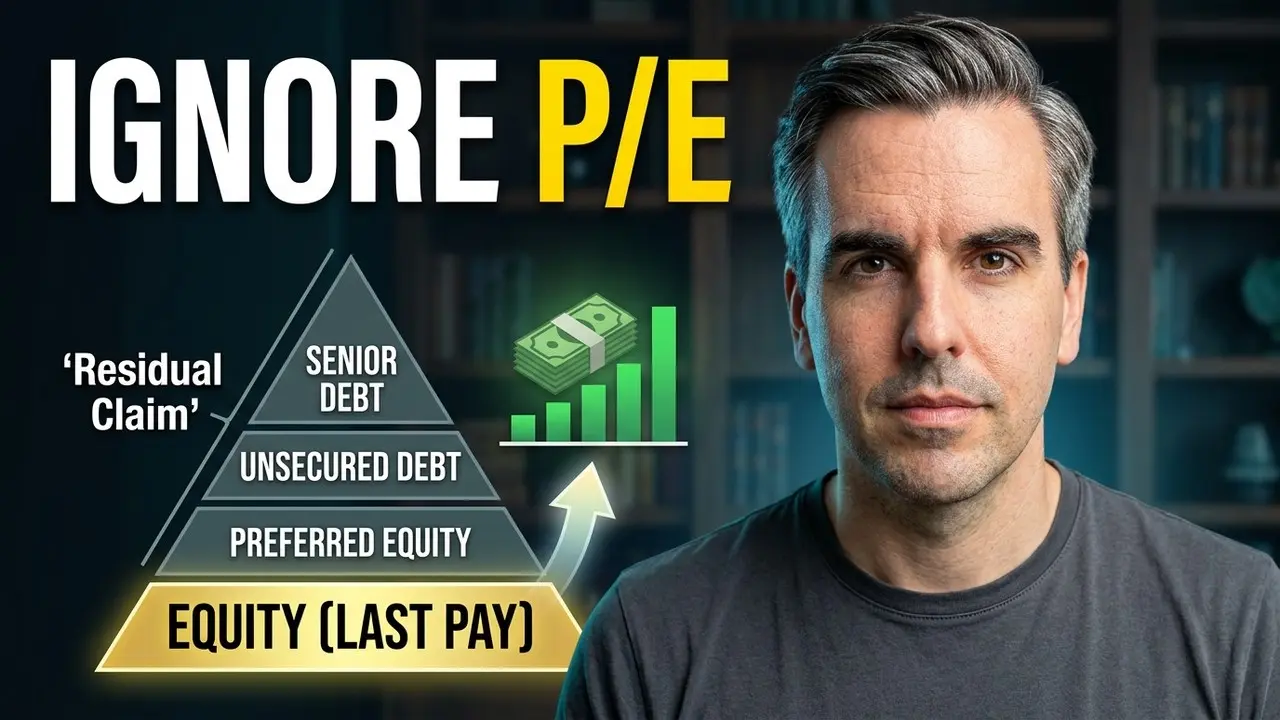
Value Investing: Why Billionaires Ignore the P/E Ratio (Do This Instead)
Why the P/E ratio tells you far less than you think, and what professionals look at instead.
-
Episode 3
Bonds: How $17 Billion Disappeared Overnight (Safe? Think Again)
Bonds are the 'safe' asset — until they are not. What actually happens when a bond goes to zero overnight.
-
Episode 4
Index Funds vs Mutual Funds: The 2% Reality That Banks Don't Tell You
Index funds versus mutual funds. The cost difference is small, certain, and compounds against you for decades.
-
Episode 5
REITs vs Buying Property: What $50 Trillion in Smart Money Knows
REITs or bricks? What institutional allocators actually own when they want property exposure — and why.
-
Episode 6
Norway's Sovereign Fund Owns No Gold. Central Banks Keep Buying.
Central banks are buying gold at record levels while most institutional portfolios hold none. Both can be right — here is why.
-
Episode 7
Bitcoin Is NOT Digital Gold (BlackRock's Institutional Proof)
Bitcoin is often sold as digital gold. Its actual correlation behaviour says otherwise — and BlackRock's own framing shows it.
-
Episode 8
Why a $846 Trillion Market Isn't the Trap Everyone Thinks It Is
The derivatives market is quoted at $846 trillion, and the number is almost meaningless. What it really measures.
-
Episode 9
Rules Over Access: The Simple System Behind $50 Trillion in Institutional Money
The finale. Institutions do not win through access — they win through rules. The system behind $50 trillion, and how to copy it.