Value Investing: Why Billionaires Ignore the P/E Ratio (Do This Instead)
Philipp 9:49 Episode 2 of Asset Classes
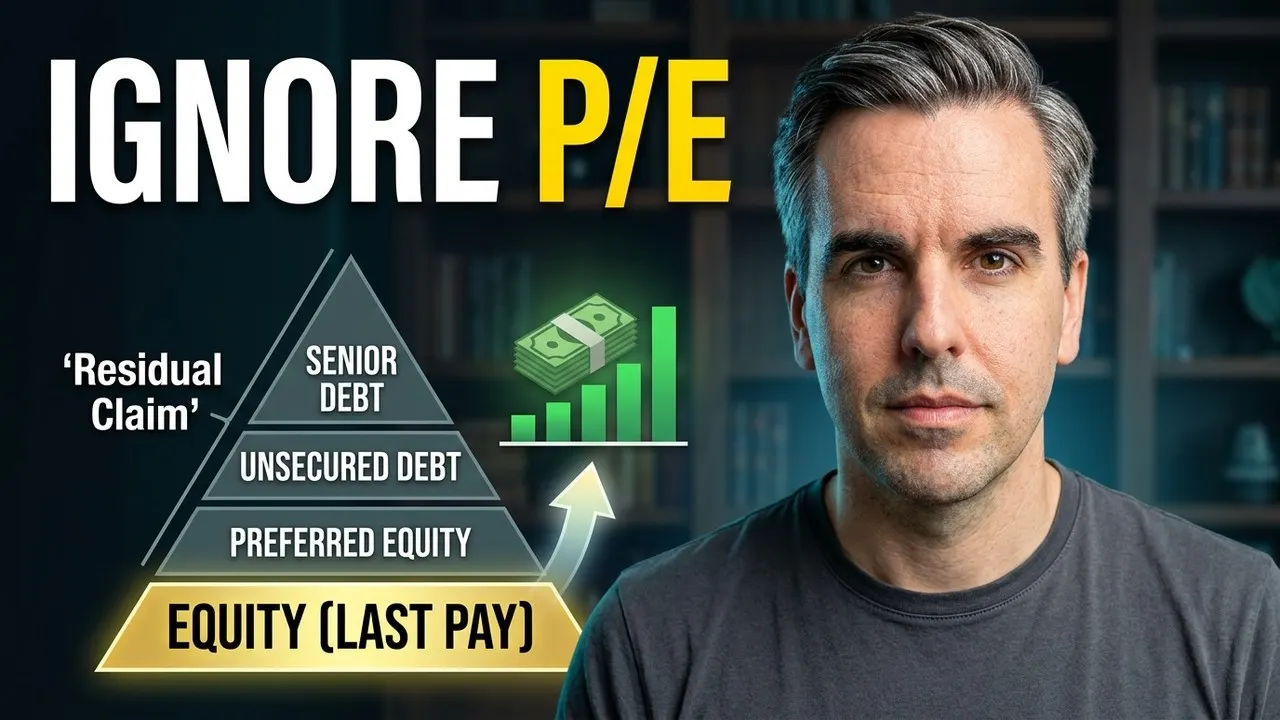
Value Investing: Why Billionaires Ignore the P/E Ratio (Do This Instead)
Why the P/E ratio tells you far less than you think, and what professionals look at instead.
Read the written version
Value Investing: Why the P/E Ratio Tells You Almost Nothing
A share is a residual claim: in a bankruptcy you are paid after the tax authority, the banks, the bondholders, the suppliers and the staff. You accept that position in exchange for unlimited upside — which means the only sane way to price it is by the cash it can actually pay you, not by an accounting figure. Free cash flow yield is that number, and it has to clear a hurdle: the risk-free rate plus the equity risk premium. On 1 January 2026 that hurdle was roughly 8.4%. By July the ten-year Treasury alone had risen from about 4.2% to about 4.6% — so the hurdle moved, and anyone still using January's number is pricing with a stale one.
Full article, with the sources and the numbers →
More from Which Asset Class Is For You?
-
 How to Pick the Best ETFs: The 4-Step Banker Audit That Filters 90% Out Episode 1 · 10:00
 -
 Bonds: How $17 Billion Disappeared Overnight (Safe? Think Again) Episode 3 · 10:17
 -
 Index Funds vs Mutual Funds: The 2% Reality That Banks Don't Tell You Episode 4 · 7:09
 -
 REITs vs Buying Property: What $50 Trillion in Smart Money Knows Episode 5 · 7:48
 -
 Norway's Sovereign Fund Owns No Gold. Central Banks Keep Buying. Episode 6 · 10:31
 -
 Bitcoin Is NOT Digital Gold (BlackRock's Institutional Proof) Episode 7 · 13:37
 -
 Why a $846 Trillion Market Isn't the Trap Everyone Thinks It Is Episode 8 · 10:55
 -
 Rules Over Access: The Simple System Behind $50 Trillion in Institutional Money Episode 9 · 13:05