How Banks Actually Make Money — Not Mostly Interest
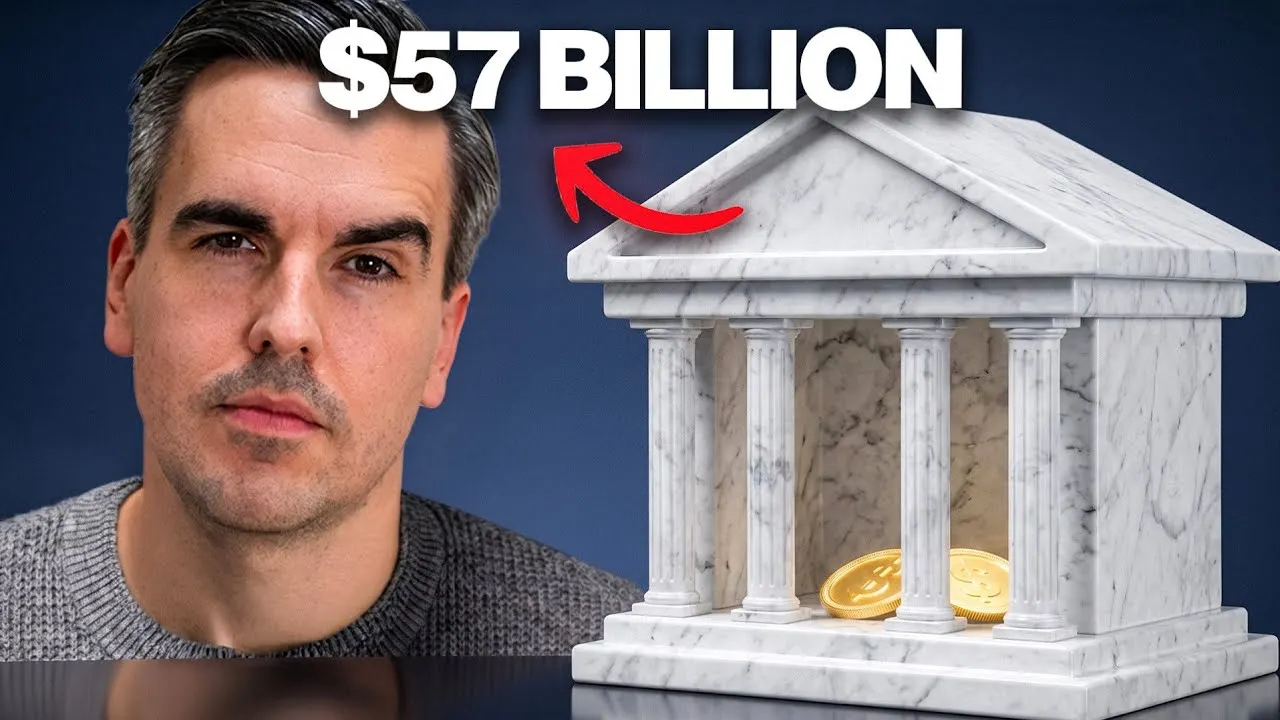
JPMorgan earned $57bn in 2025. Nearly half of the revenue behind it had nothing to do with interest. That split explains what your bank recommends to you.
How Banks Actually Make Money
Prefer to watch? This article is the written companion to the video above.
JPMorgan Chase earned $57.0 billion in net profit in 2025, one of the largest annual profits ever reported by a bank anywhere. The interesting number is not that one, though. It is what sits underneath it.
That year JPMorgan booked $185.6 billion in managed revenue, and of that, $87.0 billion — roughly 47% — was noninterest revenue.
Read that again, because it inverts what most people assume a bank is. Nearly half the revenue of the most profitable bank on earth had nothing to do with lending money. It came from fees, trading, asset management and payments: the parts of the business that most customers never think about, and that nobody explains to them.
That split is not trivia. It is the single best predictor of what your bank will recommend to you.
Think of a bank as a supermarket
A supermarket buys a product cheaply and sells it dearer. That is the aisle margin. For a bank the product is money: it takes your deposit, pays you a little, lends it out and charges a lot.
But no supermarket survives on aisle margins alone. It earns at the checkout, in transaction fees. It earns from shelf placement, deciding which products get promoted and which get buried. And it earns from services you never notice: delivery, loyalty schemes, data.
A bank is built the same way, on three pillars.
Pillar one: interest
This is the one everyone knows. You deposit money, the bank pays you a small rate, and it lends that money out as mortgages, business loans and consumer credit at a much higher one. The gap is the net interest margin.
According to the FDIC, the US banking industry’s net interest margin hit 3.39% in the fourth quarter of 2025, the highest since 2019 and above the pre-pandemic average of 3.25%. European margins are structurally lower, and not because European bankers are worse at their jobs. It is a balance-sheet difference: American banks carry far more high-yield credit card debt, which means higher risk, higher yield and a wider spread.
The spread is not a trick either. The bank earns it by taking on real work — the risk that borrowers default, the mismatch between short-term deposits and long-term loans, the infrastructure that moves money at all.
Historically this was the whole story of banking. It is not any more.
Pillar two: fees, and this is the one that concerns you
Custody, advisory, execution, cards, accounts, asset management. Anything the bank does for you that is not lending or borrowing has a fee attached.
Again, these are not fraudulent charges. Custody means someone is legally responsible for safeguarding your securities. Advisory means analysts are paid to research. Execution means there is infrastructure routing your order to a venue. All of it genuinely costs money to run.
The scale is what deserves attention. At Deutsche Bank in 2024, commissions and fee income were €10.4 billion out of €30.1 billion in net revenues, about 35%, growing 13% year on year. That is the direction of travel across European banking: as interest margins normalise, fee income becomes the growth engine. Which in practice means more product recommendations, more wealth-management pitches, and more reasons to understand what you are being sold.
Pillar three: trading and treasury
Nobody thinks about this one. Banks buy and sell currencies, bonds and derivatives every day, sometimes for clients hedging a real exposure and sometimes to manage their own balance sheet.
They also act as market makers. When you click Buy, someone has to be on the other side, and often it is a bank: holding inventory, quoting prices, absorbing the imbalance.
This is easy to sneer at and it should not be. Without market makers there is no instant execution, prices gap around violently, and small orders sit unfilled. The liquidity you take for granted is a product somebody manufactures. (How that works for your order specifically is a story of its own.)
The number that shows how the bank earns from you
Here is the arithmetic that changes how you hear the phrase “we’d recommend…”. It is illustrative and the assumptions are stated openly, because your own numbers will differ and you should check them.
You invest €10,000 in your bank’s own active fund.
- Front-end load, typically around 5% → €500 on day one
- Annual charge, typically 1.5–2% → another €150–200 in year one
The bank’s first-year revenue: roughly €650–700.
Now the same €10,000, at the same bank, into an ETF.
- No front-end load
- Annual charge around 0.2% → €20 — and it goes to the ETF provider, not the bank
- The bank keeps an execution fee and custody → perhaps €50–170 in year one
The bank’s first-year revenue: roughly €50–170.
Same customer, same money, same institution — and roughly an order of magnitude difference in what the bank earns. Not a rounding error and not a matter of taste. A factor of ten.
Which raises a question worth sitting with:
When did your bank adviser last sit you down and say — actually, in your situation, an ETF would serve you better?
Probably never. Now you know why.
And underneath that, a second layer: retrocessions
When your bank sells you a third-party fund, that fund pays the bank a recurring commission, every year, for as long as you hold it. It comes out of the fund’s management fee, which means you pay it whether or not you ever see it named.
Under MiFID II, Article 24, this must be disclosed to you: before you buy, and annually thereafter. Disclosure is not the same thing as attention, though. The document exists, almost nobody reads it, and very few advisers point at it.
The fair version of this argument
I want to be precise here, because the lazy version of this story is a conspiracy and the lazy version is wrong.
Your bank is a business. It has shareholders and revenue targets. Recommending the product that generates more revenue is not corruption; it is commercial logic behaving exactly as designed. And the bank really does deliver the services it charges for.
But there is a word for the gap between what is best for you and what is most profitable for them. The word is misalignment, and knowing it exists is not cynicism. It is literacy.
The systems that tried to remove that gap teach an uncomfortable lesson. The United Kingdom banned commission payments for retail investment advice in 2013. Product costs came down, and advice promptly became expensive enough that a large part of the population simply stopped receiving any at all. Germany kept commissions and remains overwhelmingly commission-based. Neither country has solved it. There is no clean system, only an informed customer.
Three things you can actually do
CHECK — read three lines of your bank’s annual report
It is public, and every listed bank publishes it. Find net interest income, fee and commission income and trading income.
A bank earning most of its money from fees behaves differently from one earning it from interest. The first sells products, the second sells loans, both are legitimate, and now you know which one is talking to you.
UNDERSTAND — ask which pillar the recommendation feeds
Every time a product is recommended, one question:
- Their own active fund? → Pillar two. The bank earns a large multiple of what it would from an ETF.
- A third-party fund? → Pillar two again, via retrocessions, every year you hold it.
- An ETF? → Almost nothing.
This does not make the recommendation wrong. It means the incentive is not neutral, and you should weigh it accordingly.
APPLY — ask for the ex-ante cost disclosure
This is the one thing to do this week. Before you buy anything, ask for the ex-ante cost disclosure. In the EU your firm is legally required to give it to you, under MiFID II and Commission Delegated Regulation (EU) 2017/565, Article 50.
It lists every fee, every commission and every third-party payment in euros, not percentages. Percentages hide; euros do not. Then look up a comparable ETF and compare the totals. The difference between those two numbers is the price you are paying for the advice, and whether that is worth paying is your call. You should at least be the one making it.
The thing worth remembering
Interest, fees, trading. Three pillars, all legitimate, none of them hidden.
But the balance is shifting. Record interest margins are normalising and the pressure to grow fee income is intensifying, which means the next few years will bring more recommendations, not fewer.
The next product your bank suggests is not a scandal. It is business, and it is simply not neutral advice.
Keep going
Finished reading? Three places to go next
- Try it with your numbersWhat your fund fees actually cost Set a fund’s fee against a low-cost index fund and see what it removes from the final balance.
- Next in How Money Really Moves · episode 2You Don't Own Your Stocks — Not on Paper, Anyway Check Apple's shareholder register. Your name is not on it. Five institutions sit between the Buy button and legal ownership — and here is what that costs you.
- On YouTubeSubscribe on YouTube (opens YouTube in a new tab)New videos every Tuesday: one money question per episode, checked against the data.
Primary sources (5)
- 014Q25 Earnings Press Release — full-year 2025 net income $57.0bn, managed revenue $185.6bn, noninterest revenue $87.0bn — JPMorgan Chase & Co.
- 02Quarterly Banking Profile, Fourth Quarter 2025 — US industry net interest margin 3.39%, highest since 2019 — FDIC (Federal Deposit Insurance Corporation)
- 03Full-year results 2024 — net revenues €30.1bn, commissions and fee income €10.4bn (+13%) — Deutsche Bank
- 04Directive 2014/65/EU (MiFID II), Article 24 — inducements and cost disclosure — EUR-Lex / Official Journal of the European Union
- 05Commission Delegated Regulation (EU) 2017/565, Article 50 — ex-ante disclosure of costs and charges — EUR-Lex / Official Journal of the European Union
Questions people actually ask
How do banks actually make money?
Three ways. Interest — borrowing cheaply from depositors and lending at a higher rate, the gap being the net interest margin. Fees — custody, advisory, execution, cards, account charges, asset management. And trading and treasury — market making, hedging for clients, and managing the bank's own balance sheet. All three pay for real services. None of them are hidden. But the balance between them determines what the bank has an incentive to sell you.
Is most of a big bank's money made from lending?
Less than you would think, and the share is shrinking. At JPMorgan Chase in 2025, managed revenue was $185.6bn, of which $87.0bn — roughly 47% — was noninterest revenue: fees, trading, asset management, payments. So nearly half the revenue of the most profitable bank in the world came from something other than the interest spread. At Deutsche Bank in 2024, commissions and fee income alone were €10.4bn of €30.1bn in net revenues, about 35%.
What is a net interest margin?
The gap between what a bank pays for money and what it charges for money, expressed as a percentage of its interest-earning assets. It is the core economics of lending. According to the FDIC, the US banking industry's net interest margin reached 3.39% in the fourth quarter of 2025 — the highest since 2019, and above the pre-pandemic average of 3.25%. European margins are structurally lower, largely because US banks carry far more high-yield credit card debt: higher risk, higher yield, wider spread.
Why does my bank always recommend its own fund instead of an ETF?
Because of the arithmetic. A bank's own active fund typically carries a front-end load plus an annual charge, and both flow to the bank. An ETF carries a low annual charge that goes to the ETF provider, not the bank; the bank is left with a small execution fee and custody. Run the numbers on a €10,000 investment and the first-year revenue to the bank differs by an order of magnitude. That does not make the recommendation wrong. It does mean the incentive is not neutral, and you should know which way it points before you weigh the advice.
What is a retrocession?
A recurring commission paid by a fund provider to the bank that sold you the fund — every year, for as long as you hold it. It is typically taken out of the fund's management fee, which means you pay it whether or not you ever see it named. Under MiFID II these payments must be disclosed to you before you buy and annually afterwards. Disclosure, however, is not the same as attention: the document exists, and almost nobody reads it.
What is the ex-ante cost disclosure, and how do I get it?
It is a document your investment firm must give you before you buy, under MiFID II and Commission Delegated Regulation (EU) 2017/565, Article 50. It lists all costs and charges — including third-party payments — and, critically, expresses them in cash terms, not just percentages. You do not have to file a request or justify yourself. You simply ask for it before you sign anything, and the firm is required to provide it. Then look up a comparable ETF and compare the totals. The difference is the price of the advice.
Are bank fees a scam?
No, and treating them that way will make you a worse investor, not a better one. Custody means someone is legally responsible for safeguarding your securities. Execution means there is infrastructure routing your order to a venue. Research, technology, compliance — these have real costs, and fees pay for them. The problem is not that fees exist. The problem is that not every fee creates the same incentive, and the products that pay the bank most are not reliably the products that serve you best.
What is the difference between commission-based and fee-only advice?
A commission-based adviser is paid by the product provider, out of the product's charges. A fee-only adviser is paid by you, directly, and receives nothing from providers. The United Kingdom banned commission payments for retail investment advice in 2013 under the Retail Distribution Review. Germany did not, and remains overwhelmingly commission-based. Neither model is perfect: banning commissions removes the conflict but makes advice expensive enough that many people simply go without it.
How do I tell what drives my own bank?
Open its annual report — every listed bank publishes one — and find three lines: net interest income, fee and commission income, and trading income. A bank earning most of its revenue from fees behaves very differently from one earning most of it from interest. The first sells products. The second sells loans. Both are legitimate; they simply produce different recommendations, and now you can see which one you are talking to.
So should I distrust my bank?
That is the wrong frame, and it leads people to bad decisions in both directions. Your bank is a business with shareholders and revenue targets. Recommending the more profitable product is not corruption; it is commercial logic operating exactly as designed. The useful posture is not distrust but literacy: know which of the three pillars any given recommendation feeds, ask for the cost disclosure, and price the advice accordingly. Nothing here is a personal recommendation — speak to a qualified, licensed adviser.